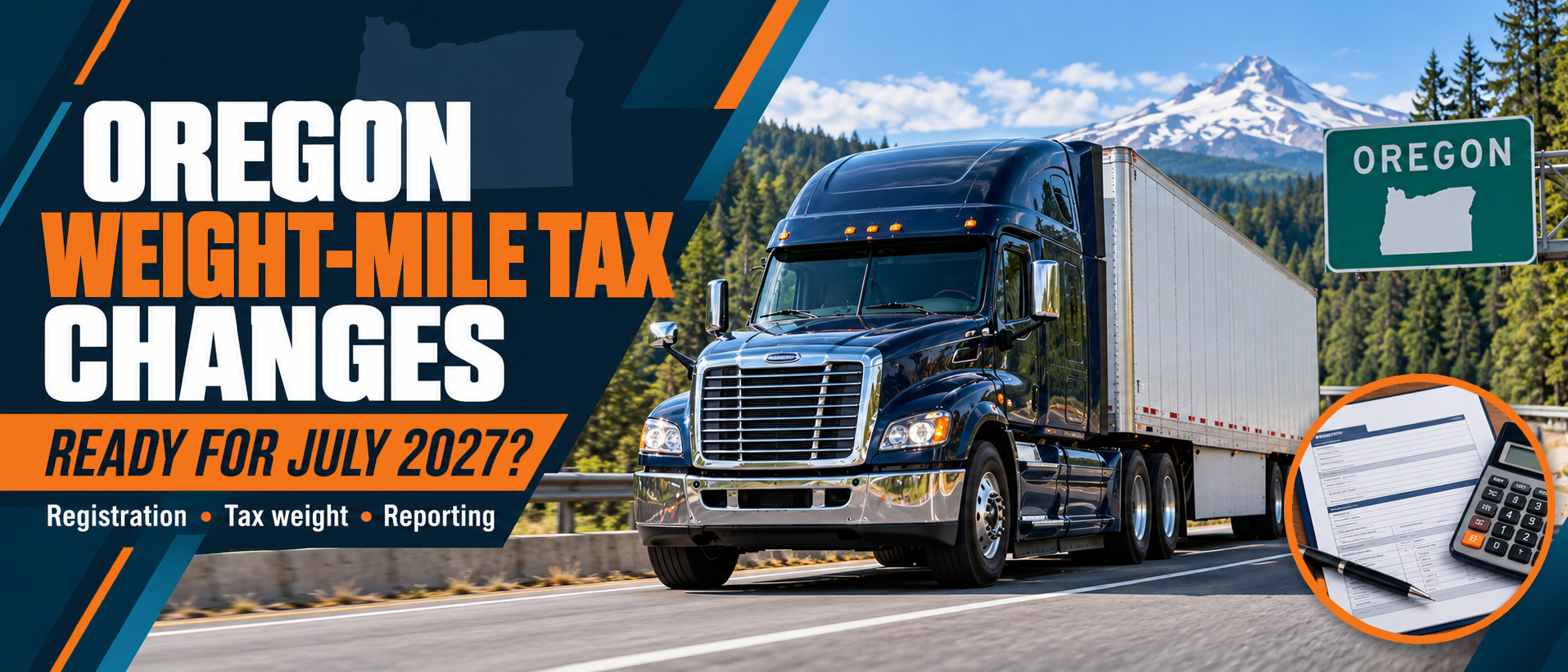
If your trucks travel through Oregon, upcoming tax changes deserve a place on your compliance calendar.
Beginning July 1, 2027, Oregon will simplify its weight-mile tax structure and tie tax reporting to each vehicle’s registered weight. A second phase arrives July 1, 2029, bringing diesel taxation, expanded IFTA participation and additional rate changes.
For fleets, simpler reporting still requires preparation as registration decisions, vehicle enrollment records and tax software will need to line up before the new structure takes effect.
Here’s what you need to know.
July 2027 brings fewer rates and a new basis for tax weight
Starting July 1, 2027, Oregon’s weight-mile tax, or WMT, will move from 85 rates to 10. For registered vehicles, the Oregon weight shown on the cab card will determine the tax weight, replacing multiple weight declarations for different configurations.
That makes registration accuracy especially important. A truck’s lighter load or empty return trip will not automatically put those miles into a lower tax category. ODOT’s new rate table instructs carriers to use the same weight and rate when returning empty as when loaded.
For example, a vehicle registered in Oregon at 80,000 pounds falls into the 74,001–80,000-pound category. Beginning July 1, 2027, that category’s published rate is $0.2512 per taxable mile. At 1,000 Oregon taxable miles, the WMT calculation would be $251.20 before any applicable adjustments or credits.
Fewer rate categories do not guarantee a lower tax bill. Fleets should calculate the effect using their registered weights, Oregon mileage and operating patterns before updating freight pricing or budgets.
Watch for the mandatory spring 2027 weight amendment
ODOT plans a Mandatory One Time Amendment in spring 2027. Carriers will review enrolled vehicles and confirm or correct their weights to match the registration documents. Oregon Trucking Online will support the process; ODOT encourages carriers without access to request it.
Before that window opens, gather current cab cards, compare them with Oregon enrollment records and identify who will complete the amendment. Review intended operating weights during renewal planning, rather than waiting until a tax return is due.
Fleets using temporary passes should also check their documents. Carriers operating on temporary passes will pay WMT based on the Oregon registered weight as shown on their cab card. If Oregon is not listed on the vehicle registration, a vehicle registration trip permit is required, and the tax weight will be the same as the registration weight listed on the trip permit.
Flat fees and reinstatement charges also change
Beginning July 1, 2027, Oregon will eliminate the $5 per-vehicle reinstatement fee. The $25 suspension fee remains. The modernization plan also removes outdated chip and agricultural flat fees.
ODOT’s FAQ says wood-chip operations losing the flat-fee option must report on a mileage basis. Log flat-fee rates decrease, while sand and gravel dump commodity flat-fee rates increase.
Qualifying commodity haulers should compare the available filing methods using their own mileage and utilization. The 2027 flat-fee instructions retain daily recordkeeping requirements and require mileage tax for miles hauling commodities outside the elected flat-fee categories.
Keep the midyear reporting transition straight
Use the structure and rates applicable to the operating period. Operations before July 1, 2027, remain under the existing system, even when the report is filed afterward. Operations on or after July 1 use the new structure.
Update reporting software and internal instructions so staff can distinguish the two periods. Keep supporting records for earlier operations; a simpler future reporting structure does not remove the need to substantiate prior returns.
More Is Coming: July 2029 brings diesel taxes and expanded IFTA participation
The next phase is scheduled for July 1, 2029. Oregon plans a hybrid tax model under which heavy trucks pay fuel tax alongside reduced WMT rates. Diesel will be taxed at its first sale in Oregon, and the state will expand its participation in the International Fuel Tax Agreement, or IFTA, to collect and distribute IFTA funds from all carriers.
WMT continues under this model. Fleets should prepare to review fuel purchasing, receipts, IFTA reporting and Oregon mileage reporting together as implementation instructions become available.
The same phase includes changes to flat fees and Road Use Assessment Fee rates, a separate WMT table for heavy electric vehicles, and IFTA and dyed-diesel enforcement. ODOT also plans the Oregon Registration Commercial Authority Application, or ORCAA, to modernize commercial registration and IFTA administration.
What fleets should do now
Start with a review of every vehicle that operates in Oregon. Confirm its registration documents, enrollment information and expected operating weight. Then assign responsibility for monitoring MOTA instructions, reviewing the new rate tables and coordinating reporting changes with your software provider or filing service.
Build separate plans for the July 2027 and July 2029 transitions. That gives your team time to assess costs and make changes without confusing requirements that take effect two years apart.
Prepare for Oregon changes with CNS Licensing
Accurate registration records will become central to Oregon’s new tax structure. Whether your fleet travels to Oregon regularly or takes occasional loads into the state, now is a practical time to review your credentials and reporting process.
Contact CNS Licensing to discuss your fleet’s registration, permitting and motor carrier tax reporting needs as you prepare for Oregon’s upcoming changes. Contact us at 717-625-7355 or email info@cnslicensing.com.