Why a “Warning” Can Hurt More Than a Citation for New Fleets
For many new or small fleets, getting stopped at a weigh station or roadside inspection can be a nerve-racking experience—especially when you’re trying to maintain

Get help filing, updating, and renewing the registrations your trucking company needs to operate.
DOT authority filing and renewal services help motor carriers manage the licensing, tax, registration, and authority requirements needed to stay active and compliant.
CNS helps trucking companies with MC authority, USDOT updates, MCS-150 biennial updates, IFTA fuel tax filing, IRP licensing, 2290 Heavy Vehicle Use Tax, permits, title management, and related renewal deadlines.
Home » DOT Licensing » DOT Authority Filing and Renewals
DOT authority filing and renewal services help trucking companies file, update, renew, and maintain the registrations, permits, tax filings, and operating authority required to run legally.
These services may include DOT number updates, MC authority filings, MCS-150 biennial updates, IFTA licenses and fuel tax returns, IRP apportioned registration, 2290 HVUT filings, title management, permits, and renewal tracking.
For many carriers, licensing and renewals are not one-time tasks. They are recurring compliance requirements that must be monitored throughout the year.
Filing or renewal service | Who it helps | How CNS helps |
MC Authority Filing | Carriers that need operating authority for regulated for-hire transportation | Helps prepare and file authority applications and related registration steps |
USDOT Number Updates | Carriers that need to update company information with FMCSA | Helps update carrier information and keep records current |
MCS-150 Biennial Update | Carriers, registrants, and other entities under FMCSA jurisdiction | Helps file required updates every two years and avoid USDOT deactivation |
IFTA Licensing | Carriers operating qualified motor vehicles in more than one IFTA jurisdiction | Helps apply for IFTA licenses and decals |
IFTA Fuel Tax Filing | Carriers that need quarterly fuel tax reporting | Helps collect mileage and fuel data, prepare returns, and file on time |
IRP Licensing | Carriers operating apportioned vehicles across jurisdictions | Helps with apportioned registration, renewals, and vehicle registration support |
2290 Heavy Vehicle Use Tax | Carriers operating taxable highway vehicles at 55,000 pounds or more | Helps e-file Form 2290 and obtain stamped Schedule 1 proof |
Licensing and Permitting | Carriers needing state, trip, fuel, mileage, or operating permits | Helps identify, apply for, and renew required permits |
Title Management | Carriers managing vehicle titles across a fleet | Helps organize, secure, and manage vehicle titles and title records |
Renewal Tracking | Carriers that do not want to miss recurring filing deadlines | Helps monitor deadlines and reduce administrative risk |
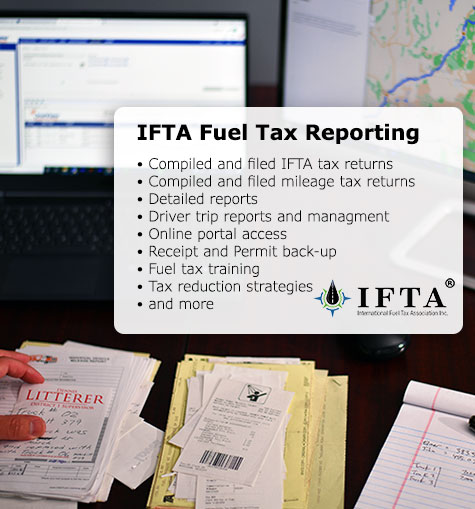
Every trucking company has to file its fuel taxes. It can become very confusing if you have not kept up with all of your receipts. Let us manage your IFTA Tax Returns.
We have been handling our clients’ licensing and permitting needs for over 25 years. Licensing for IFTA, IRP, Title Managment and more.
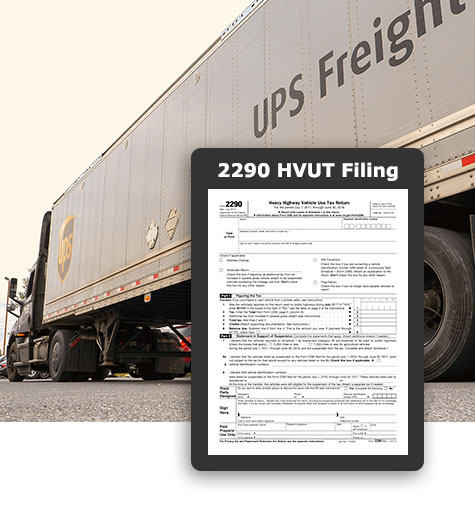
Truckers with a vehicle that has a taxable gross weight of 55,000 pounds or more, are required to electronically file HVUT Form 2290.
The MCS-150 form is the only form that can be used to update a USDOT number. This is called a biennial update and must be performed every 2 years.
Every trucking company has to file its fuel taxes. It can become very confusing if you have not kept up with all of your receipts. Let us manage your IFTA Tax Returns.
We have been handling our clients’ licensing and permitting needs for over 25 years. Licensing for IFTA, IRP, Title Managment and more.
Truckers with a vehicle that has a taxable gross weight of 55,000 pounds or more, are required to electronically file HVUT Form 2290.
The MCS-150 form is the only form that can be used to update a USDOT number. This is called a biennial update and must be performed every 2 years.
MC authority is FMCSA operating authority that allows certain for-hire motor carriers, brokers, freight forwarders, and passenger carriers to operate in regulated interstate commerce.
Not every company with a USDOT number needs MC authority, but many for-hire carriers do. The type of authority depends on what the company transports, whether it is for-hire, whether it crosses state lines, and whether it transports property, passengers, household goods, or regulated materials.
CNS helps carriers determine which authority may apply and supports the filing process.
An MCS-150 biennial update is the required FMCSA update used to keep a carrier’s USDOT number record current.
FMCSA requires entities under its jurisdiction to update their information every two years, even if the company’s information has not changed. Missing the biennial update can lead to USDOT number deactivation and civil penalties.
CNS helps carriers file MCS-150 updates and keep the renewal on schedule.
If a carrier misses the required MCS-150 biennial update, FMCSA can deactivate the USDOT number and may assess civil penalties. CNS helps carriers complete overdue updates and reduce the risk of operating with an inactive or out-of-date record.
Best for: Carriers with overdue MCS-150 filings, inactive USDOT numbers, or uncertainty about their next update deadline.
FMCSA requires regulated entities to update their information every two years, even if nothing has changed.
IFTA fuel tax filing is the process of reporting fuel use and distance traveled by qualified motor vehicles that operate in more than one IFTA jurisdiction.
Carriers often need to collect fuel receipts, fuel card reports, mileage data, GPS reports, trip sheets, and jurisdictional distance records to prepare accurate quarterly returns.
CNS helps carriers collect data, prepare IFTA returns, file reports, and maintain records for future audits.
IRP licensing is apportioned vehicle registration for qualified vehicles that travel in multiple jurisdictions. It allows carriers to register vehicles under a base jurisdiction while fees are distributed based on distance traveled in participating jurisdictions.
A vehicle generally qualifies for IRP if it has two axles and a gross or registered gross vehicle weight over 26,000 pounds, has three or more axles regardless of weight, or is used in a combination with a gross or registered gross vehicle weight over 26,000 pounds.
CNS helps carriers apply for IRP, renew apportioned registration, update fleets, and maintain supporting records.
Form 2290 is the IRS Heavy Highway Vehicle Use Tax return used for taxable highway motor vehicles with a taxable gross weight of 55,000 pounds or more.
Carriers use Form 2290 to report and pay HVUT and obtain a stamped Schedule 1, which is commonly needed as proof of payment for vehicle registration.
CNS helps carriers e-file Form 2290 and obtain Schedule 1 proof quickly.
A USDOT number identifies a motor carrier and is used to track safety information. MC authority is operating authority that certain for-hire carriers need to transport regulated commodities, passengers, or other covered transportation in interstate commerce.

For many new or small fleets, getting stopped at a weigh station or roadside inspection can be a nerve-racking experience—especially when you’re trying to maintain

In response to dozens of industry comments, FMCSA is stepping back from its original 2023 proposal to create a federal-level appeals process for Requests for

On average, motor companies regulated by the Department of Transportation paid over $27 million in fines each year with an average fine per case costing