Amazon Relay’s New Safety Matrix: What Carriers Need to Know Before February 2026
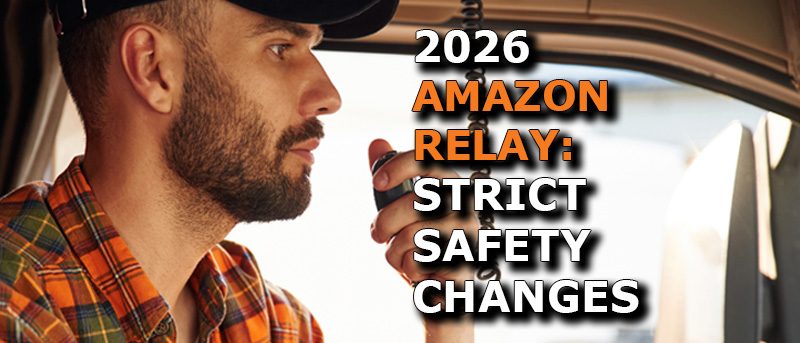
Amazon Relay is raising the bar on carrier safety—and for many fleets, the clock is already ticking.
While Amazon has long relied on FMCSA SMS data to determine whether carriers are eligible to haul Relay freight, a new safety matrix is being phased in that adds driver and vehicle violation rate scoring. This change represents a major shift in how roadside inspection performance will impact a carrier’s access to Amazon loads.
Here’s what carriers need to know, what’s changing, and how Compliance Navigation Specialists (CNS), along with CNS Insurance, can help fleets stay eligible, insurable, and profitable.
How Amazon Relay Has Traditionally Evaluated Safety
Until now, Amazon Relay has primarily used FMCSA Safety Measurement System (SMS) data, reviewing a carrier’s CSA BASIC scores over the previous two years to determine eligibility.
These BASICs include:
- Unsafe Driving
- Hours-of-Service (HOS) Compliance
- Vehicle Maintenance
- Driver Fitness
- Controlled Substances & Alcohol
- Hazardous Materials (when applicable)
Carriers with poor BASIC performance often lost access to Relay loads, even if violations were isolated or had already been addressed internally.
What’s New: Amazon Relay’s Driver & Vehicle Violation Rates
Starting this fall and expanding in 2026, Amazon Relay is adding two new safety metrics as an “add-on” to the existing SMS-based system, not a replacement.
New Safety Metrics Being Added
- Driver Violation Rate
- Vehicle Violation Rate
These metrics focus specifically on roadside inspection violations over the past 12 months, giving Amazon a more direct view into how carriers manage drivers, equipment, and corrective actions.
Related: Did you recent DOT audit or roadside inspection have mistakes?
Implementation Timeline: New vs. Existing Carriers
New Relay Carriers
- Effective: October 31, 2025
- New carriers onboarding to Relay must meet the new violation thresholds immediately.
Existing Relay Carriers
- Effective: February 2026
- Current carriers will be evaluated using:
- Existing SMS / CSA BASIC data (past 2 years)
- PLUS the new driver and vehicle violation rates (past 12 months)
This means many carriers who are currently approved could lose access if they don’t prepare now.
Understanding the Driver Violation Rate
The driver violation rate measures how often driver-related violations occur during roadside inspections, with out-of-service (OOS) violations weighted more heavily.
Key Details:
- Focuses on:
- Unsafe Driving
- HOS Compliance
- Driver Fitness
- Controlled Substances & Alcohol
- OOS violations count twice as much as non-OOS violations
- Threshold:
- Must be 35% or below to haul with Amazon Relay
Why It Matters
A high driver violation rate signals:
- Poor driver qualification file (DQF) management
- Inadequate training or coaching
- Weak drug & alcohol compliance programs
- Gaps in HOS monitoring or ELD oversight
Understanding the Vehicle Violation Rate
The vehicle violation rate tracks how often vehicle-related violations occur during roadside inspections.
Key Details:
- Emphasis on:
- Vehicle Maintenance
- OOS mechanical violations
- OOS violations are weighted twice as heavily
- Threshold:
- Must be 50% or below to haul with Amazon Relay
Why It Matters
Vehicle violation rates highlight:
- Preventive maintenance gaps
- Poor DVIR processes
- Incomplete maintenance documentation
- Missed inspection defects before roadside stops
How Amazon Relay Calculates Violation Rates
Amazon Relay uses FMCSA inspection data from the past 12 months and applies the following formula:
- Add:
- Non-OOS violations
- PLUS OOS violations (weighted 2x)
- Divide by:
- Total number of inspections during the 12-month period
This calculation applies separately to driver inspections and vehicle inspections.
Important Note:
- Carriers with three or more inspections that exceed thresholds may lose access to Relay loads.
- No appeal process will be offered.
- Responsibility falls entirely on the carrier to identify trends and fix them.
Why This Matters Beyond Amazon Loads
Amazon’s new safety matrix reflects a broader industry trend.
Higher Standards = Real Consequences
- Public safety: Violation rates strongly correlate with crash risk.
- Operational impact: Higher violation rates can lead to:
- More DOT inspections
- Fines and enforcement actions
- Out-of-service orders
- Insurance impact:
- Poor roadside inspection history directly affects underwriting, premiums, and insurability.
This is where compliance and insurance intersect, and where many carriers struggle without expert support.
Practical Tips to Keep Violation Rates Low
Before enforcement begins in 2026, carriers should focus on proactive prevention:
1. Strengthen Driver Qualification Files (DQFs)
- Keep licenses, medical cards, MVRs, and training records current
- Audit DQFs regularly
- Address driver fitness and controlled substance risks proactively
2. Improve Driver Coaching & Training
- Reinforce HOS compliance
- Address unsafe driving behaviors
- Use targeted retraining after violations—not just discipline
3. Tighten Vehicle Maintenance Programs
- Conduct thorough pre-trip and post-trip inspections
- Fix defects immediately and document repairs
- Maintain clean, organized maintenance records
4. Track and Celebrate Clean Inspections
- Clean inspections matter more than ever
- Use them to reinforce safety culture
- Share wins with drivers and maintenance teams
How Compliance Navigation Specialists (CNS) Can Help
Amazon Relay’s new safety matrix makes it clear: compliance can no longer be reactive.
CNS helps carriers stay ahead through:
- CSA & SMS Monitoring
- Driver Qualification File Management
- Drug & Alcohol Program Administration
- HOS and ELD Compliance Support
- Mock DOT Audits & Inspection Readiness
- Corrective Action Planning after Violations
- Safety Training & Coaching Programs
Rather than guessing which violations matter most, CNS helps carriers focus on the data Amazon, and insurers, are actually watching.
If you would like more information on how you can start being more proactive with your compliance, please fill out the form below. We are here to help and answer any questions.
Where CNS Insurance Fits In
Safety scores don’t just impact load access, they impact insurance. CNS Insurance works alongside compliance efforts to:
- Help carriers secure coverage despite tightening underwriting standards
- Reduce premium increases caused by violation trends
- Align safety programs with insurer expectations
- Position fleets as lower-risk operations in the eyes of underwriters
When compliance and insurance strategy work together, carriers gain stability, not surprises at renewal time.
If you have any questions or concerns, please email info@cnsinsures.com.
Questions about DOT Compliance, Licensing, Audits, Programs, etc.?
Our DOT Specialists are here to help!
What are you searching for?
Is DOT Compliance your Top Priority?
Our DOT Compliance Programs ensure it is your top priority and keeps your business running.
Related Services
Subscribe to our Monthly Newsletter
Receive the latest transportation and trucking industry information about FMCSA and DOT Audits, Regulations, etc.
Related news
Trucking News
Get the latest trucking news on DOT Compliance, Licensing, Audits, and more!

Paper Medical Cards Still Valid: FMCSA Issues 60-Day NRII Transition Waiver for CDL Drivers
The Federal Motor Carrier Safety Administration (FMCSA) has issued a new waiver related to the National Registry II (NRII) medical certification process, extending temporary flexibility

Deregulation or Disruption? Inside the FMCSA Rule Changes That Could Reshape Trucking in 2026
A Practical Breakdown of New FMCSA Rules in 2026: What’s Changing, What’s Slowing Down, and What Fleets Should Prepare For From a government shutdown to
FMCSA Removes or Warns 7,500 CDL Training Providers: What It Means for New Drivers and Why CNS Driver Training Center Stands Apart
The trucking industry just experienced one of the largest federal crackdowns in CDL training history. Lawmakers have been urging the U.S. Department of Transportation (USDOT)
