ELP, Clearinghouse, and NR-II: The Biggest FMCSA Compliance Changes for 2026 Explained
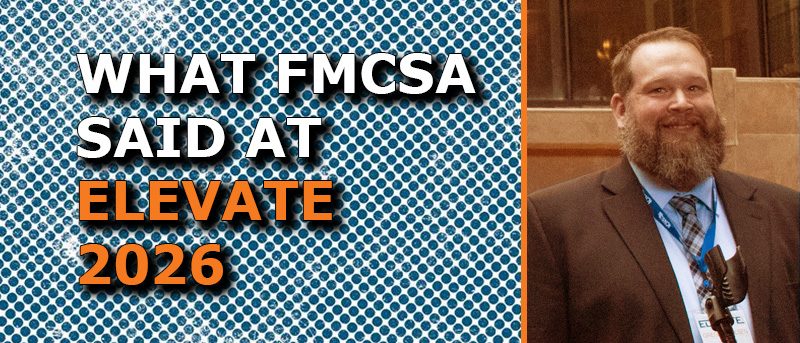
Insights from Gregory Olsen’s ELEVATE 2026 presentation, including CDL crackdowns, ELP enforcement, Clearinghouse changes, and what fleets must do now to stay compliant.
At the 2026 ELEVATE: CNS Safety and Compliance Conference, Gregory Olsen, Acting Division Administrator for FMCSA’s South Carolina Division, delivered a critical regulatory update that every motor carrier should be paying attention to.
From sweeping changes to non-domiciled CDLs to enforcement shifts in English Language Proficiency (ELP) and major system overhauls like NR-II and MOTUS, Olsen’s presentation made one thing clear:
FMCSA is tightening enforcement, modernizing systems, and closing compliance gaps fast.
Below is a breakdown of the most important updates, what they mean, and how your operation should respond.
FMCSA’s Core Mission Hasn’t Changed, But Enforcement Has
If you have been in the safety and compliance field for a while, you know that FMCSA’s mission remains the same: Reduce crashes, injuries, and fatalities involving large trucks and buses.
However, Olsen emphasized that how FMCSA is achieving that mission is evolving, with a stronger focus on:
- Data-driven enforcement
- System modernization
- Fraud prevention
- Accountability across states and carriers
Non-Domiciled CDLs: Major Crackdown & New Rule (Effective March 2026)
What Is a Non-Domiciled CDL?
A non-domiciled CDL is issued to:
- Drivers from foreign countries, or
- Drivers from U.S. states prohibited from issuing CDLs
These licenses fall under 49 CFR 383.23 and require proof of lawful presence in the U.S.
Why FMCSA Took Action
The 2025 Annual Program Review revealed serious compliance failures:
- Some states had error rates as high as 53%
- 25 jurisdictions were flagged for substantial noncompliance
- Violations included:
- CDLs issued beyond lawful presence expiration
- Improper issuance to ineligible drivers
- Lack of verification of immigration status
These failures were linked to 17 fatal crashes and 30 fatalities in 2025 alone
The New 2026 Final Rule: Key Requirements
Effective March 16, 2026, FMCSA implemented stricter controls:
- Eligibility Restricted To:
- H-2A (Temporary Agricultural Workers)
- H-2B (Temporary Non-Agricultural Workers)
- E-2 (Treaty Investors)
- Required Documentation:
- Unexpired foreign passport
- Valid I-94 / I-94A
- License Validity:
- Cannot exceed I-94 expiration
- Maximum duration: 1 year
- Mandatory Verification:
- States must verify status using the SAVE system
- In-Person Transactions Required:
- Applies to renewals, upgrades, duplicates, etc.
Operational Impact on Carriers
- Many states have paused issuance entirely (including Pennsylvania)
- Some states are phasing out non-domiciled CDLs altogether
- Existing licenses may be revoked if improperly issued
Key Takeaway: Carriers relying on non-domiciled drivers should audit driver qualification files immediately and prepare for workforce disruption.
English Language Proficiency (ELP): Now an Out-of-Service Violation
What Changed?
As of May 2025, FMCSA made ELP violations Out-of-Service (OOS).
Drivers must be able to:
- Understand traffic signs
- Communicate with law enforcement
- Respond during emergencies
Roadside Inspection Process
Inspectors now follow a two-step evaluation:
- Driver Interview (English only)
- Traffic Sign Recognition Test
No translators allowed:
- No interpreters
- No apps
- No cue cards
Critical Misconception
A CDL DOES NOT EQUAL proof of English proficiency. Drivers must demonstrate real-time communication ability during inspections.
Carrier Responsibility
Under 49 CFR 391.11, carriers must ensure drivers meet ELP standards.
Recommended Internal Process:
- Conduct English-only driver interviews
- Test knowledge of:
- Trip details
- Logs (HOS)
- Shipping papers
- Vehicle inspection items
- Use MUTCD traffic signs for evaluation
Key Takeaway:If your driver cannot pass an English interview internally, they are a compliance risk on the road.
National Registry of Medical Examiners (NR-II): Digital Transformation
What Changed?
As of June 23, 2025:
- Medical exam results are electronically transmitted
- The MVR is now the official proof of certification
- Paper Medical Examiner’s Certificates (MECs) are no longer primary proof
Temporary Waiver (Through April 10, 2026)
Due to state delays, FMCSA allows:
- Paper MEC use for up to 60 days after exam
Common Compliance Failures
Most issues stem from data mismatches, including:
- Name spelling errors
- CDL number mismatches
- Incorrect suffix placement (e.g., Jr., III)
- Wrong address
- Missing restriction indicators
These errors prevent certification from appearing on the MVR.
What To Do If Certification Doesn’t Post
After 48 hours:
- Verify driver info matches CDL exactly
- Contact Medical Examiner
- Contact SDLA
- Contact FMCSA tech support
Key Takeaway: NR-II shifts compliance from paper management to data accuracy management.
Drug & Alcohol Clearinghouse (DACH-II): Increased Enforcement
Reporting Requirements
Employers (or C/TPAs) must report within 3 business days:
- Alcohol results ≥ 0.04
- Refusals to test
- Actual knowledge violations
- RTD and follow-up testing results
“Actual Knowledge” – Critical Clarification
Valid sources include:
- Direct observation
- Previous employer reports
- DUI citations
- Driver admission
Important: Do NOT report positive drug tests as actual knowledge (These are reported by the MRO)
Mandatory CDL Downgrades
- States are now required to downgrade CDLs automatically upon Clearinghouse violations
- Driving privileges are only restored after Return-to-Duty (RTD) completion
Key Takeaway: Clearinghouse is now tightly integrated with licensing and violations immediately impact driver eligibility.
MOTUS: FMCSA’s New Registration System
FMCSA is rolling out a new system: MOTUS. USDOT Registration System
Goals of MOTUS
- Simplify registration
- Improve identity verification
- Reduce fraud
- Create a single system for lifecycle management
Key Features
Simplified Registration
- One online system (phased rollout)
- Centralized company profiles
Enhanced Security
- Identity verification required
- Business validation checks
USDOT Number Updates
- New suffixes will identify registration types
- No change to vehicle marking requirements
What’s Changing (Now)
- Third parties already using the system
- All users must create profiles
- PPOB (principal place of business) verification enhanced
What’s NOT Changing Yet
- MC/FF numbers remain
- BOC-3 process unchanged
- Safety registration not yet included
Key Takeaway: MOTUS is FMCSA’s long-term move toward a fully digital, fraud-resistant registration ecosystem.
What Carriers Should Do Right Now
Gregory Olsen’s presentation made one thing clear: Compliance is becoming more precise, more digital, and less forgiving.
Immediate Action Items:
- Audit all non-domiciled drivers
- Implement ELP screening in hiring & onboarding
- Validate driver medical data accuracy (NR-II)
- Review Clearinghouse reporting procedures
- Prepare for MOTUS system adoption
Need Help Navigating These Changes?
CNS works with carriers across the country to:
- Audit driver qualification files
- Ensure Clearinghouse compliance
- Support medical certification workflows
- Strengthen hiring and onboarding processes
The best defense against heightened enforcement is proactive compliance.
That’s exactly why CNS developed the PSM DOT Essentials Program designed to help carriers maintain the foundational compliance systems FMCSA expects.
If you’re unsure how these updates impact your operation, we can help you stay ahead of enforcement, not behind it.
Interested? Learn more by filling out the form below.
Questions about DOT Compliance, Licensing, Audits, Programs, etc.?
Our DOT Specialists are here to help!
What are you searching for?
Is DOT Compliance your Top Priority?
Our DOT Compliance Programs ensure it is your top priority and keeps your business running.
Related Services
Subscribe to our Monthly Newsletter
Receive the latest transportation and trucking industry information about FMCSA and DOT Audits, Regulations, etc.
Related news
Trucking News
Get the latest trucking news on DOT Compliance, Licensing, Audits, and more!

Roadcheck 2026 Survival Guide: Prevent ELD Falsification & Cargo Securement Failures
Annual CVSA Blitz Is Coming This May: Fix These ELD & Cargo Issues Before It’s Too Late The Commercial Vehicle Safety Alliance (CVSA) has announced

What to Look for in a DOT SAP: Tips & Best Practices for Drivers and Employers
8 Tips on Why Your SAP Provider Might Be Putting You at Risk Not all Substance Abuse Professionals (SAPs) are the same and choosing the

FMCSA’s Anti-Chameleon Carrier Strategy: Principal Place of Business Enforcement and MOTUS
The Federal Motor Carrier Safety Administration (FMCSA) has announced a renewed crackdown on “chameleon carriers”, which are unsafe operators who attempt to escape their safety
