

2026 Brake Safety Week: How Small Motor Carriers Can Prepare and Prevent Roadside Violations
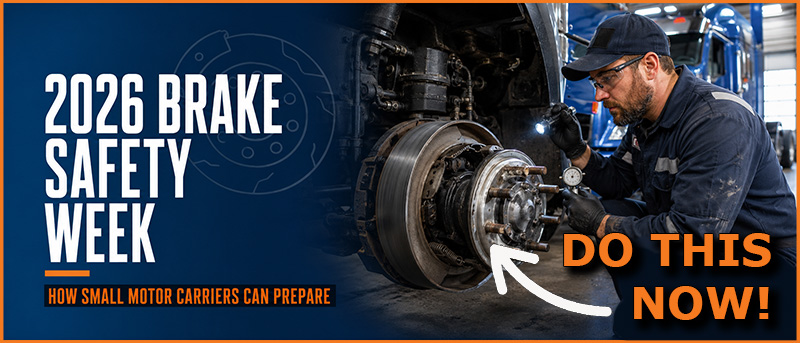
Prepare your small fleet for 2026 Brake Safety Week, Aug. 23–29, with practical brake inspection, maintenance, drum and rotor management tips.
For a small motor carrier, one vehicle placed out of service can disrupt an entire operation. A brake violation may result in an unexpected repair bill, a missed delivery, lost revenue and additional scrutiny of the carrier’s safety practices.
That makes the Commercial Vehicle Safety Alliance’s 2026 Brake Safety Week an important deadline for fleet owners, safety managers, maintenance providers and drivers.
The 2026 Brake Safety Week will take place Aug. 23-29 throughout the United States, Canada and Mexico. During the seven-day enforcement and education initiative, certified inspectors will conduct commercial motor vehicle inspections with particular attention to brake systems and components.
This year, inspectors will place added emphasis on the condition of brake drums and rotors. Vehicles with brake-related out-of-service violations may be prohibited from operating until the problems are corrected. CVSA will also collect inspection and violation data and publish its findings after the event.
Small carriers should use the weeks leading up to Brake Safety Week to identify problems before an inspector does.
Why Brake Safety Week Matters to Small Fleets
Brake enforcement is not limited to Brake Safety Week. Commercial motor vehicles must have safe, properly operating brake systems every day. Routine maintenance of your vehicles is a necessity to ensure that your biggest assets always stay on the road.
However, Brake Safety Week brings additional attention to brake inspection and maintenance. Inspectors may examine components such as:
- Brake drums and rotors
- Brake linings and pads
- Brake chambers
- Slack adjusters
- Pushrod travel
- Air hoses and tubing
- Air system leaks
- Hydraulic brake components
- Tractor protection systems
- Low-air warning devices
- Parking and emergency brakes
- Missing, damaged or contaminated components
Brake violations are a persistent enforcement problem. During the 2025 International Roadcheck, brake-system violations and the separate “20% defective brakes” category together accounted for 41.1% of all vehicle out-of-service violations identified across North America.
For a five-truck carrier, losing one truck means temporarily losing 20% of its operating capacity. That is why small fleets cannot afford to treat brake maintenance as something that happens only during an annual inspection.
The 2026 Focus: Brake Drums and Rotors
Brake drums and rotors absorb and dissipate the heat created during braking. Their condition directly affects braking performance.
A damaged drum or rotor may reduce brake efficiency, increase stopping distance or contribute to the failure of other brake components. Broken pieces may also separate from the vehicle and strike surrounding traffic.
Under 49 CFR §393.47, brake components must be constructed, installed and maintained to provide safe and reliable stopping. Drum and rotor thickness cannot be below the limits established by the component manufacturer.
Drivers can identify many visible warning signs, but thickness measurements, internal inspections and repairs should be completed by appropriately trained maintenance personnel using the manufacturer’s specifications.
Eight Brake Drum and Rotor Conditions to Check
CVSA’s 2026 Brake Safety Week guidance recommends paying particular attention to the following conditions.
1. Visible drum and rotor damage
Drivers should inspect the visible portions of drums and rotors during pre-trip and post-trip inspections. Look through available inspection openings and around the wheel assembly without crawling under an unsecured vehicle.
Any suspected damage should be reported before the vehicle is dispatched again.
2. Cracked or broken rotors
Look for cracks or broken areas along the rotor’s friction surface. A crack is especially serious when it extends through the rotor or creates the possibility that a piece could separate.
Do not assume that a small visible crack is only cosmetic. Have a qualified technician determine whether the rotor meets the manufacturer’s requirements.
3. Cracked or broken drums
Check visible drum surfaces for cracks that extend toward or through the outer edge. Missing pieces, broken sections and severe external cracking require immediate attention.
A broken drum is not a condition that should be postponed until the next preventive maintenance service.
4. Heavy rust across the rotor
Surface rust may develop when a truck or trailer sits for a period of time. However, heavy rust covering the entire friction surface may indicate that the brake is not applying properly.
If one rotor looks significantly different from the rotors on the same vehicle, the difference may reveal an inoperative or underperforming brake.
5. Grooved rotors and metal-to-metal contact
Deep grooves may indicate that a brake pad has worn through and metal is contacting the rotor. Drivers may also hear grinding or notice a change in braking performance.
Metal-to-metal contact can quickly damage the rotor and may result in an inoperative brake. The vehicle should be inspected before it returns to service.
6. Exposed rotor vents
A ventilated rotor should not be worn to the point that the center vents are exposed through the friction surface. This indicates severe material loss.
Maintenance personnel should measure rotor thickness and compare it with the manufacturer’s discard specification.
7. Repairs that do not follow manufacturer requirements
Not every drum, rotor, pad or brake assembly uses the same specifications. Replacement parts must be appropriate for the vehicle and installed according to the manufacturer’s instructions.
Small carriers should ask maintenance providers to document the part numbers, measurements and work completed rather than relying on a receipt that only says “brakes repaired.”
8. Unreported defects
Drivers should document defects through the carrier’s inspection-reporting process and immediately communicate conditions that could affect safe operation.
A defect report is only useful when someone reviews it, assigns the repair and confirms that the problem was corrected before the vehicle returns to service.
Do Not Stop at the Drum or Rotor
Although drums and rotors are the 2026 focus, inspectors will not ignore the rest of the brake system. A truck can still be placed out of service for another critical brake condition.
Before Brake Safety Week, have your maintenance provider check:
- Pushrod stroke and brake adjustment
- Brake lining and pad thickness
- Oil, grease or other contamination on friction surfaces
- Damaged, loose or missing brake components
- Chafed, flattened, cracked or leaking air lines
- Air leaks on the service and emergency sides of the system
- Brake chambers and mounting brackets
- Slack adjusters and clevis pins
- S-cams, bushings and return components
- Air compressor operation and pressure buildup
- Low-air warning device operation
- Tractor protection and trailer emergency systems
- ABS warning lights and related defects
CVSA’s S-Cam Brake Inspection Checklist warns that drivers should not simply readjust an automatic slack adjuster when a brake is out of adjustment. Repeated manual adjustment can mask an underlying mechanical problem. The brake should be evaluated and repaired by a trained brake technician.
A Practical Preparation Plan for Small Motor Carriers
Small fleets do not necessarily need a large maintenance department to manage brake safety. They need a consistent process with clear responsibility.
Four to six weeks before Brake Safety Week
Schedule a brake-focused inspection of every power unit and trailer. Do not wait until the week before the event, when repair shops may be busier and replacement parts harder to obtain.
Ask the technician to examine the complete brake system, not just whether the vehicle can pass an annual inspection.
Create a list showing:
- Unit number
- Inspection date
- Technician or repair facility
- Defects found
- Repairs required
- Repairs completed
- Follow-up inspection date
- Vehicle’s current service status
Two to three weeks before the event
Confirm that every identified defect has been repaired. Review repeat problems by vehicle, axle and component.
If the same truck repeatedly develops an out-of-adjustment brake, air leak or uneven wear pattern, do not continue treating the symptom. Investigate the underlying cause.
Also review whether preventive maintenance intervals are appropriate for each vehicle’s:
- Mileage
- Age
- Duty cycle
- Operating terrain
- Load weight
- Stop frequency
- Exposure to road salt, water or corrosive environments
A local delivery truck with frequent stops may require a different inspection schedule than a tractor primarily used for long highway runs.
One week before the event
Conduct a final walk-around and driver inspection refresher. Make sure drivers know what to look for, how to report a defect and who to contact after hours.
Verify that maintenance records are current and organized. Federal regulations require carriers to systematically inspect, repair and maintain vehicles under their control and retain required vehicle maintenance records. 49 CFR §396.3 requires records that identify the vehicle, indicate inspection and maintenance due dates, and document the date and nature of completed work.
During Brake Safety Week
Drivers should not rush through inspections because the truck passed a shop inspection several days earlier. Brake defects can develop between maintenance visits.
Require drivers to report:
- Changes in stopping performance
- Pulling to one side during braking
- Grinding, scraping or unusual noises
- Burning smells or excessive heat
- Visible cracks or missing pieces
- New air leaks
- Low-air warnings
- ABS warning lights
- Excessive stopping distance
- Smoke from a wheel end
A driver who discovers a potentially serious problem should stop and contact the carrier rather than attempt to finish the route.
Improve Driver Pre-Trip and Post-Trip Inspections
Telling a driver to “check the brakes” is too vague. Drivers need specific inspection expectations.
A useful brake inspection routine should include:
- Listening for audible air leaks.
- Checking air pressure buildup and warning devices.
- Testing service, parking and trailer brakes as applicable.
- Looking for loose, damaged or missing components.
- Inspecting visible brake hoses for rubbing, wear or damage.
- Checking visible drums and rotors for cracks, missing pieces, heavy rust and abnormal wear.
- Looking for contamination around the wheel and brake assembly.
- Reporting changes in braking feel, sound, smell or performance.
Drivers should never place themselves beneath a vehicle that has not been properly secured. Detailed measurements and repairs should be left to trained personnel with the correct tools and procedures.
Manage Brake Maintenance Records Like an Inspector Will Review Them
A stack of repair receipts does not automatically demonstrate an effective maintenance program.
For each brake repair, document:
- The specific defect reported
- Which axle and wheel end were affected
- Measurements taken, when applicable
- Parts replaced
- Technician or repair facility
- Date the repair was completed
- Confirmation that the vehicle was safe to return to service
Maintain a closed-loop process: Driver reports defect → fleet reviews report → repair is assigned → technician completes repair → carrier verifies completion → vehicle returns to service.
This process helps prevent defects from being reported but forgotten, especially in a small operation where one person may manage dispatch, safety and maintenance.
Need Help Preparing for a Roadside Inspection?
Small motor carriers often have limited time and personnel to manage driver training, vehicle maintenance documentation and DOT compliance. A missed defect or incomplete record can result in roadside violations, downtime and increased safety risk.
Compliance Navigation Specialists can help your company review its safety and maintenance processes, identify compliance gaps and prepare drivers and vehicles for roadside inspections.
Contact CNS before the Aug. 23-29, 2026 Brake Safety Week to discuss a proactive fleet safety review or DOT compliance support. Call (888) 260-9448 or email info@cnsprotects.com.

Luke Kibby
Questions about DOT Compliance, Licensing, Audits, Programs, etc.?
Our DOT Specialists are here to help!
Is DOT Compliance your Top Priority?
Our DOT Compliance Programs ensure it is your top priority and keeps your business running.
Related Services
Related news
Trucking News
Get the latest trucking news on DOT Compliance, Licensing, Audits, and more!

Roadcheck 2026 Survival Guide: Prevent ELD Falsification & Cargo Securement Failures
Annual CVSA Blitz Is Coming This May: Fix These ELD & Cargo Issues Before It’s Too Late The Commercial Vehicle Safety Alliance (CVSA) has announced

Why a “Warning” Can Hurt More Than a Citation for New Fleets
For many new or small fleets, getting stopped at a weigh station or roadside inspection can be a nerve-racking experience—especially when you’re trying to maintain

The 10 Most Common DQF Violations (And How to Avoid Them)
Every year, DOT auditors uncover thousands of violations related to Driver Qualification Files (DQFs). For many carriers, these mistakes can trigger hefty fines, audit failures,
