What Should Trucking HAZMAT Carriers Learn From Ohio Train Disaster?
Non-Compliance of HAZMAT transportation rules can be the imminent death for a company, as the severity of fines and penalties can be up to $186,000
If you operate a business that hauls hazardous materials or transports passengers in vehicles like limos, charter buses or school buses, there are a lot of different regulations that will apply.
Home » DOT Compliance » Special Carriers
There are many requirements among states and authorities to keep track of when it comes to hauling hazardous material. Non-Compliance can be the imminent death for a company, as the severity of fines and penalties can be up to $186,000.
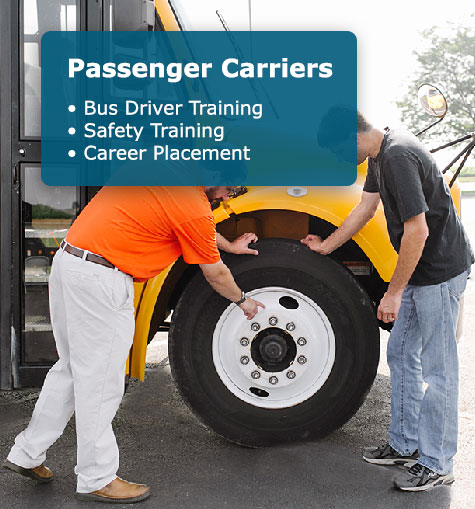
Bus drivers are always in demand and we are happy to train you. Our bus driver trainees are trained to be as safe as possible.
There are many requirements among states and authorities to keep track of when it comes to hauling hazardous material. Non-Compliance can be the imminent death for a company, as the severity of fines and penalties can be up to $186,000.
Bus drivers are always in demand and we are happy to train you. Our bus driver trainees are trained to be as safe as possible.
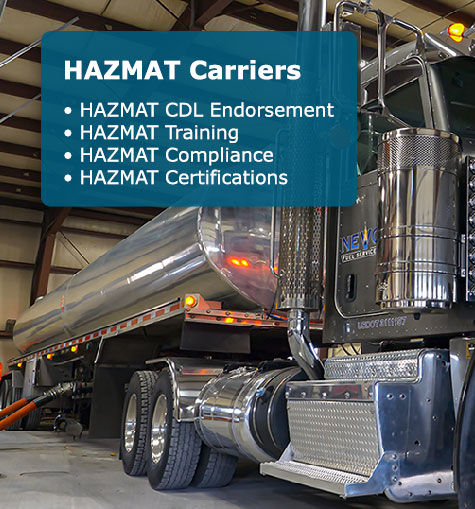
HAZMAT carriers must comply with the Hazardous Materials Regulations (HMR) in 49 CFR Parts 171–180, enforced by the Federal Motor Carrier Safety Administration and PHMSA. These rules govern packaging, placarding, shipping papers, training, security plans, and emergency response requirements.
Non-compliance involving hazardous materials can result in civil penalties exceeding $186,000 per violation, criminal charges, out-of-service orders, and loss of operating authority. The severity reflects the high risk to public safety, infrastructure, and the environment.
HAZMAT employees must receive general awareness/familiarization training, function-specific training, safety training, and security awareness training. Training must occur initially and at least every three years, or sooner if job duties change.
Common violations include improper placarding, incomplete or incorrect shipping papers, inadequate training records, missing security plans, and improper packaging or securement. These violations frequently trigger out-of-service orders.
Passenger carriers are subject to DOT regulations based on interstate commerce and whether they operate for-hire. Receiving compensation for transporting passengers generally makes the operation for-hire, which triggers FMCSA compliance requirements.
Yes. CDL bus drivers are subject to DOT drug and alcohol testing, including pre-employment, random, post-accident, reasonable suspicion, return-to-duty, and follow-up testing, just like other safety-sensitive drivers.
Yes. Passenger carriers employing CDL drivers must register with the FMCSA Clearinghouse, conduct pre-employment queries, and perform annual queries to verify drivers are not prohibited from performing safety-sensitive duties.
Passenger carriers must maintain Driver Qualification Files (DQFs) for each driver, including driver applications, MVRs, medical certificates, drug and alcohol records, training documentation, and annual reviews, just like freight carriers.
Common violations include driver qualification file deficiencies, expired medical cards, inadequate drug and alcohol testing programs, improper vehicle inspections, and failure to meet insurance or authority requirements.
CNS provides HAZMAT training, security plan development, passenger carrier compliance support, driver qualification file management, Clearinghouse setup, drug and alcohol consortium services, and audit defense, helping special carriers reduce risk and stay operational.
We offer a long list of licensing services and are always adding more to accommodate our clients, including obtaining DOT numbers, MC authorities, UCR, vehicle registration for Hazmat or Passenger carriers and so much more.
Proactive Safety Management® (PSM) is the basis of our business and simply means that your company is working hard to be safe, compliant, and stay ahead of the FMCSA. All of our DOT Compliance Programs are based on this concept and include what you need to keep your DOT Licensing needs in order.

Non-Compliance of HAZMAT transportation rules can be the imminent death for a company, as the severity of fines and penalties can be up to $186,000

The FMCSA waiver, which became effective January 3, 2022, expires March 31, 2022. On January 4th, 2022, the FMCSA, in coordination with the Department of
Motor carriers whose drivers transport hazardous materials/dangerous goods are specially trained in emergency safety and applicable HM/DG federal regulations. During the surprise five-day CVSA 2021