Trucking Companies
DOT Licensing and Permitting
You have questions. We have answers.
- What is a DOT Number?
- When do you need it?
- What is the weight limit?
Much like our DOT Compliance Services, we offer a number of DOT Licensing Services to make your interaction with government authorities easy, fast, cost-effective, and with the least amount of stress as possible.
Our DOT Licensing Specialists will learn your operation so we can accurately set up and renew your required DOT authorities.
We offer a long list of licensing services and are always adding more to accommodate our clients, including obtaining DOT numbers, MC authorities, vehicle registration, UCR and so much more.
Starting your own trucking company is the biggest decision you have ever made. You need to make sure everything is completed correctly the first time.
For-hire and private haulers will need a DOT Number and an MC Authority and some may need multiple operating authorities depending on business plans.
Filing and renewing your licenses is an ongoing process that can become very cumbersome and time consuming.
Companies that operate commercial vehicles transporting passengers or hauling cargo in interstate commerce must be registered with the FMCSA and must have a USDOT Number.
In addition to drivers and DOT numbers, registering your vehicles is at the top of the list when getting your business started.
All motor carriers are required to file their fuel taxes quarterly. This can get very complicated if you are an interstate trucker. We can manage your IFTA Fuel Taxes for you.
Truckers with a vehicle that has a taxable gross weight of 55,000 pounds or more, are required to electronically file HVUT Form 2290.
The UCR requires individuals and companies that operate commercial motor vehicles in interstate or international commerce to register their business with a participating state and pay an annual fee based on the size of their fleet.
Getting your company started requires an EIN and declaring your company as an LLC, S-Corp, etc. depending on company plans and tax filing purposes.
What do you need to do to start a trucking company?
Starting a trucking business involves medical qualification, business registration, federal authority, insurance, and ongoing compliance. The core steps include obtaining a DOT medical card, registering your business, securing USDOT and MC numbers, purchasing required insurance, filing federal paperwork, enrolling in tax programs, and maintaining DOT compliance.
No. You do not need a DOT number if you are not using your vehicle for commercial purposes.
If you receive prize money, awards or profit from the shows in any way, you can be considered commercial carrier and, depending on your weight, you would need a DOT number.
If you hold a valid IFTA license, it is imperative to submit a quarterly report by the month’s end following each calendar quarter (January, April, July, and October). This requirement applies even if your truck did not operate during the period. Failing to file on time incurs penalties and interest charges, which can escalate the tax bill significantly. Missing a quarter’s filing could lead to suspension or revocation of your license, necessitating additional reinstatement fees. Failure to pay taxes owed may also result in the inability to renew the IFTA permit for the upcoming year. Compliance with these regulations demands careful attention and diligence.
In Pennsylvania, registering your commercial vehicles with the International Registration Plan (IRP) is an option that allows for interstate operation (across state lines) under a single registration plate and registration certificate, which would be issued by your “home” or “base” state.
The Unified Carrier Registration (UCR) requires individuals and companies that operate commercial motor vehicles in interstate or international commerce to register their business with a participating state and pay an annual fee based on the size of their fleet.
This includes ALL carriers – private, exempt, or for hire. Brokers, freight forwarders and leasing companies are also required to register and pay a fee unless they also operate as a motor carrier.
These states include:
Alabama, Alaska, Arkansas, California, Colorado, Connecticut, Delaware, Georgia, Idaho, Illinois, Indiana, Iowa, Kansas, Kentucky, Louisiana, Maine, Massachusetts, Michigan, Minnesota, Mississippi, Missouri, Montana, Nebraska, New Hampshire, New Mexico, New York, North Carolina, North Dakota, Ohio, Oklahoma, Pennsylvania, Rhode Island, South Carolina, South Dakota, Tennessee, Texas, Utah, Virginia, Washington, West Virginia, Wisconsin.
An Employer Identification Number (EIN) is a nine-digit number issued by the Internal Revenue Service used to identify your business for tax purposes. Trucking companies need an EIN to:
File business tax returns
Open a business bank account
Receive payments from shippers and brokers
Apply for DOT and MC authority
DOT licensing specialists can assist with EIN setup and help determine the correct business structure, such as an LLC, S-Corp, partnership, or corporation.
Yes. Before forming an LLC or applying for operating authority, you must qualify medically to operate a commercial motor vehicle (CMV). Federal law requires all CMV drivers, including owner-operators and hotshot drivers, to pass a DOT physical exam and hold a valid Medical Examiner’s Certificate (DOT medical card).
A DOT physical evaluates:
Vision and hearing
Blood pressure and pulse
Urinalysis
General physical, mental, and emotional health
DOT physicals must be completed by a Certified Medical Examiner listed on the National Registry.
A new carrier must undergo a new entrant safety audit within the first 6 – 18 months after receiving their DOT number.
This is the first chance for a new carrier to garner safety history that will later be accounted for during the next insurance renewal. If the safety history is bad due to not complying with federal regulations found in the audit, insurance rates will stay high.

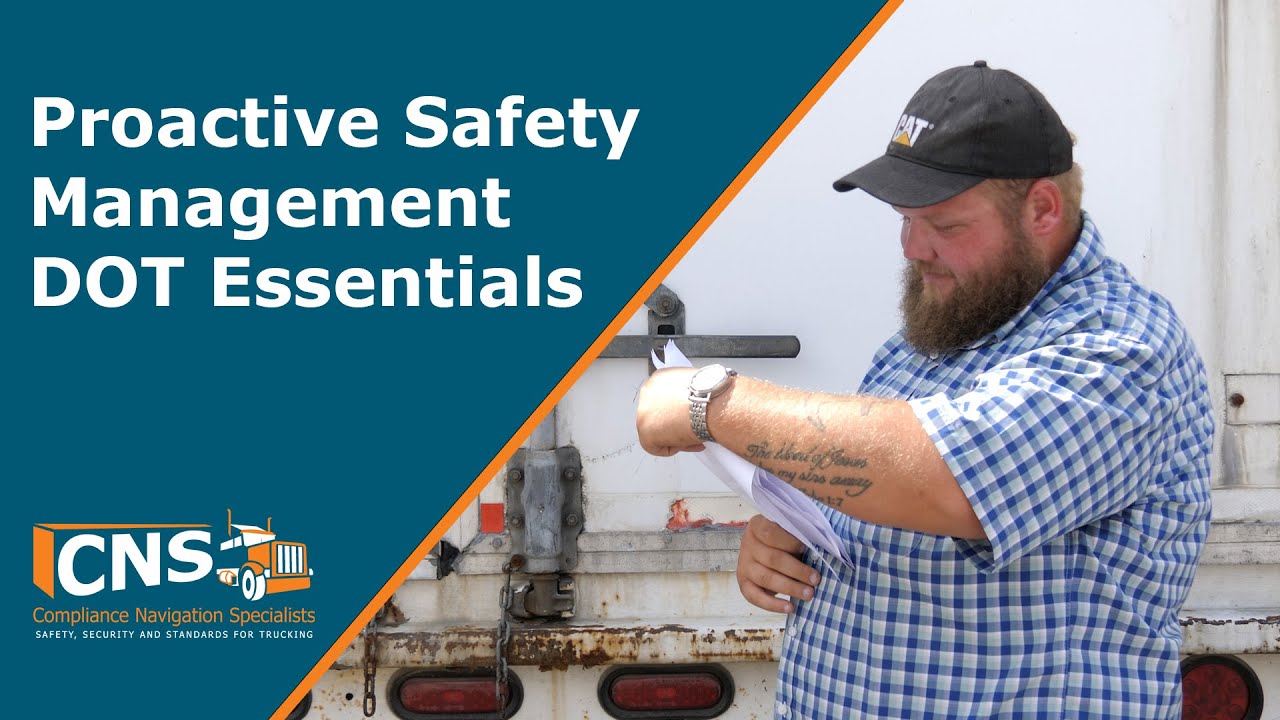
Our PSM DOT Essentials Program is a program designed to keep motor carriers compliant with the basic DOT regulations that nearly all carriers must follow.
The PSM DOT Essentials Program can be utilized by companies of all types and sizes and is a budget-friendly option to manage exactly what you need to stay DOT compliant.
Proactive Safety Management® (PSM) is the basis of our business and simply means that your company is working hard to be safe, compliant, and stay ahead of the FMCSA. All of our DOT Compliance Programs are based on this concept and include what you need to keep your DOT Licensing needs in order.